eCMR · International transport
eCMR: the international consignment note, in electronic form
Issue, sign and preserve the CMR digitally under the eCMR Protocol, with the same validity as paper in the countries that have ratified it.
- CMR Convention and eCMR Protocol
- 42 Parties
- Advanced electronic signature
What it is
What is the eCMR?
The eCMR is the CMR Convention consignment note in electronic form. It formalises the contract for the international carriage of goods by road and travels with the goods, just like the paper CMR, but without printed copies.
Same validity as paper
The Additional Protocol to the CMR Convention (Geneva, 2008) puts electronic and paper format on an equal footing. Spain acceded to it in 2011.
42 Parties
Valid in the countries that have ratified the Protocol: 42 Parties as of November 2026 according to the official UN list, most of Europe. The latest are Albania, North Macedonia, Montenegro and Serbia.
Who signs
The sender and the carrier (art. 5 of the Convention); the consignee signs the receipt (art. 13).
How it works
From the dock to the destination, without paper
01Office
Issue
From your TMS or ERP through the API or with templates: nobody fills in the form by hand.
02Loading
Signature
Sender and carrier sign on the phone with an advanced electronic signature; no copies to hand out.
03On the road
Tracking
Reservations and incidents with time and photograph; at a check, the authority opens the document with the QR code.
04Destination
Delivery
The consignee signs the receipt and every party sees it straight away, not when the paper comes back.
05Afterwards
Archive
A signed copy for every party and preservation with its evidence, with the data ready for eFTI.
The document
The CMR you know, box by box
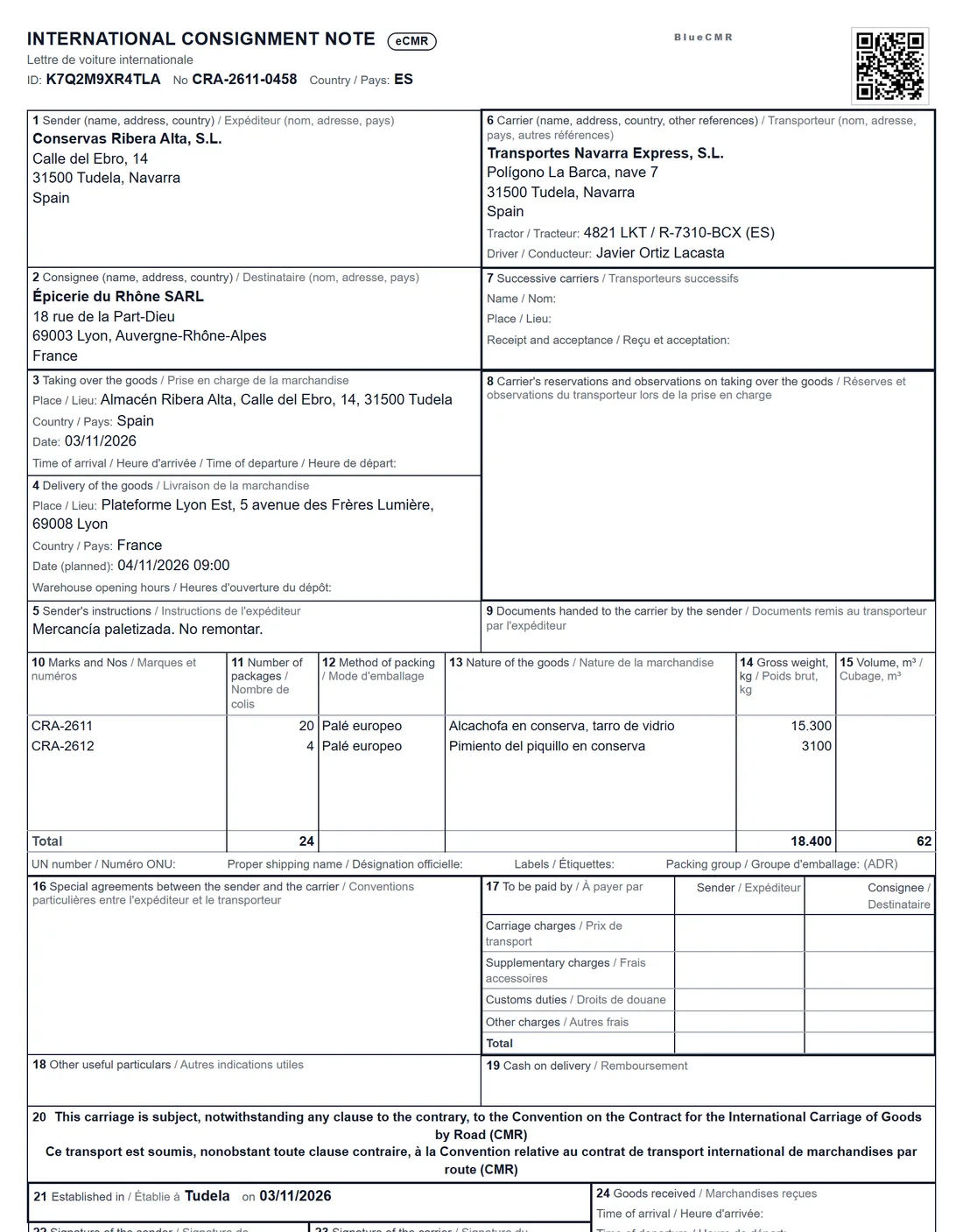
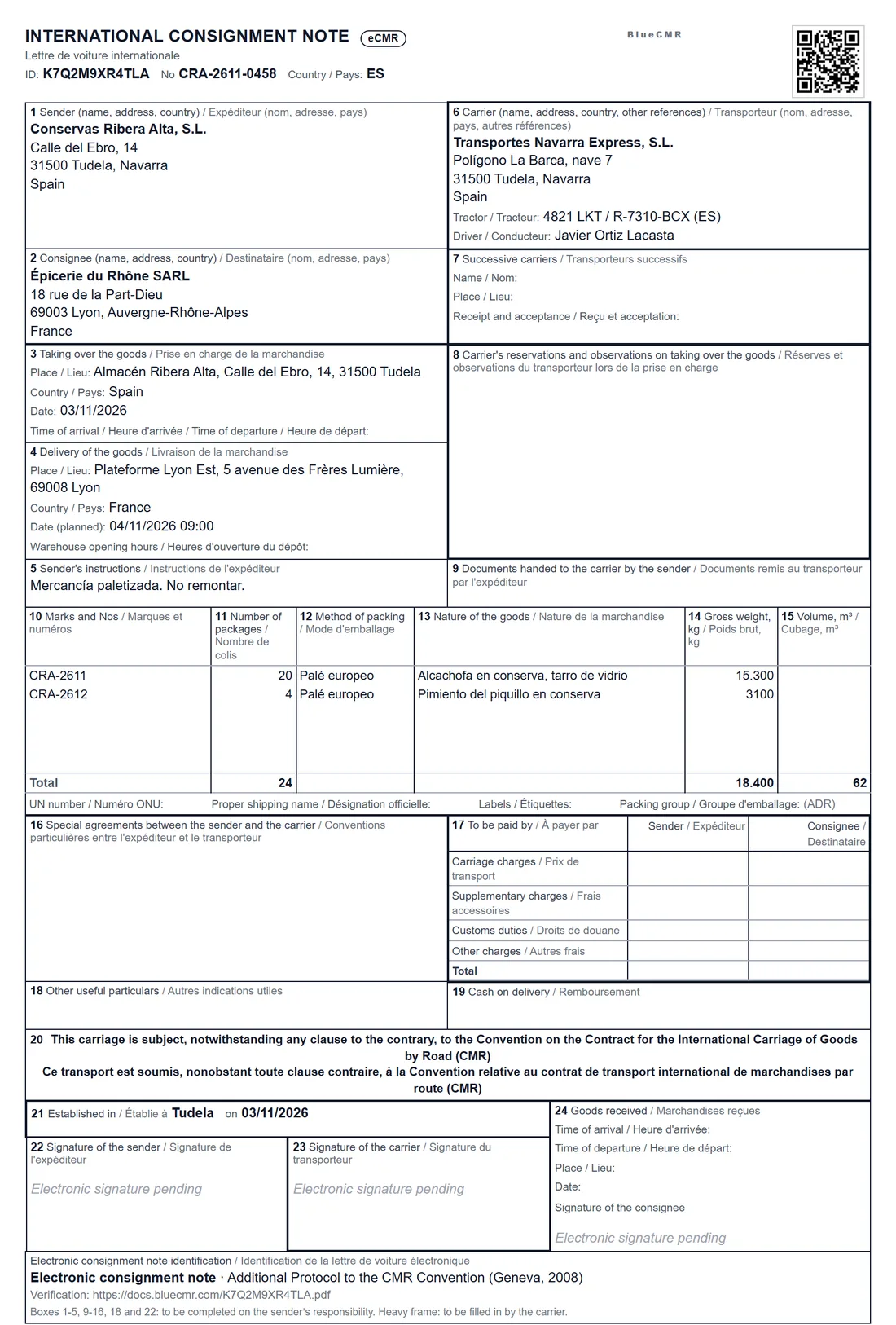
This is an eCMR issued with BlueCMR (sample data): the same structure as the CMR form, with labels in the languages of the transport.
- 1
QR code
Any authority opens the document and checks its signatures.
- 2
Sender and consignee
Name, address and country (boxes 1 and 2).
- 3
Carrier and vehicle
With plates and driver; if they change on the road, the document is updated.
- 4
Taking over and delivery
Places, countries and dates (boxes 3 and 4).
- 5
Carrier’s reservations
Those made on taking over the goods, with time and signature (box 8).
- 6
Goods
Marks, packages, packaging, nature, weight and volume (boxes 10 to 15).
- 7
Subject to the CMR Convention
The clause required by article 6, in the languages of the document (box 20).
- 8
Signatures
Sender and carrier sign; the consignee signs the receipt (boxes 22 to 24).
- 9
Electronic consignment note
Identified under the Additional Protocol to the CMR Convention, with its verification address.
FAQ
Common questions about the eCMR
Is the eCMR mandatory in Spain?
No. The eCMR is the electronic alternative to the paper CMR and its use is voluntary. What is mandatory in electronic form in Spain is the control document (DeCA) for domestic transport. For international transport the CMR or eCMR is enough; in cabotage, an eCMR that includes the control document data can replace it.
What technical requirements must it meet?
Guaranteeing the authenticity, integrity and accessibility of the document, under the 2008 Additional Protocol. BlueCMR does so with an eIDAS advanced electronic signature, timestamping and access by QR code.
Can it include dangerous goods?
Yes. In international transport of dangerous goods, the ADR transport document information can go in the eCMR itself.
What if the transport is domestic?
Then the document is the national consignment note and, in Spain, the control document (DeCA). BlueCMR issues them all with the same workflow.
International transport without paper and with full legal validity
We will show you the eCMR with your routes and customers, with no commitment.